-
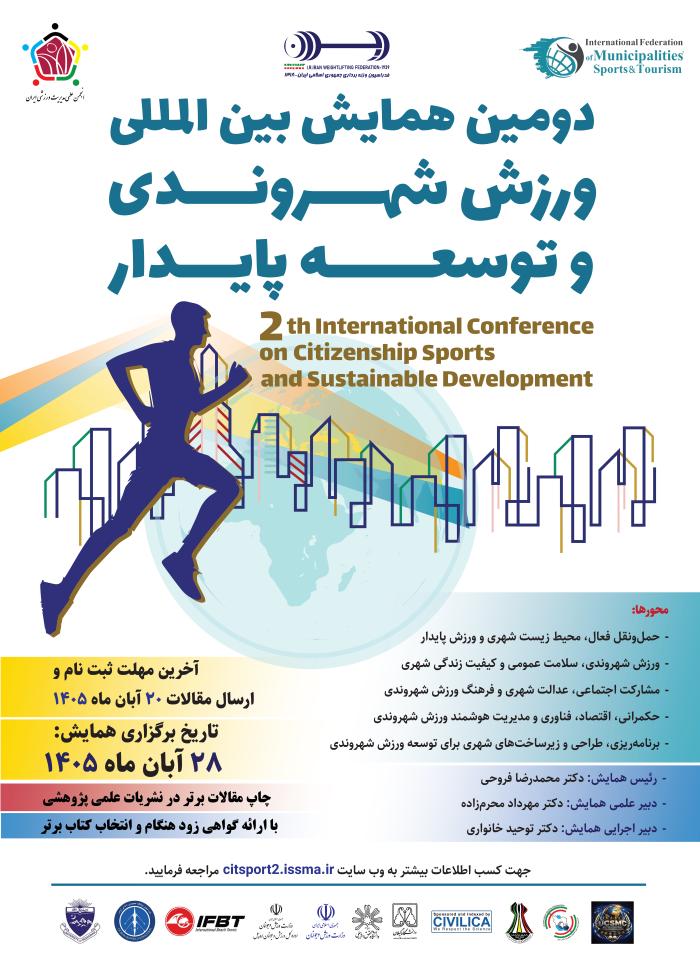
حملونقل فعال، محیط زیست شهری و ورزش پایدار :
-
ورزش شهروندی، سلامت عمومی و کیفیت زندگی شهری :
-
مشارکت اجتماعی، عدالت شهری و فرهنگ ورزش شهروندی :
-
حکمرانی، اقتصاد، فناوری و مدیریت هوشمند ورزش شهروندی :
-
برنامهریزی، طراحی و زیرساختهای شهری برای توسعه ورزش شهروندی :
-
Citizen Sport, Public Health, and Urban Quality of Life
-
2. Urban Planning, Design, and Infrastructure for the Development of Citizen Sport
-
Active Mobility, Urban Environment, and Sustainable Sport
-
4. Social Participation, Urban Equity, and the Culture of Citizen Sport
-
5. Governance, Economy, Technology, and Smart Management of Citizen Sport


Greetings and respect,
Sport, as one of the most important pillars of human development, plays a fundamental role in promoting public health, strengthening social cohesion, and building sustainable communities. Therefore, the organization of the Second International Conference on Citizen Sport and Sustainable Development is considered a valuable initiative toward strengthening scientific interactions, exchanging experiences, and expanding international cooperation among universities and research institutions in the fields of sport and community health.
Azzam University, Peshawar, Pakistan, while expressing its support for this scientific event, emphasizes the importance of innovative approaches in the development of citizen sport, the promotion of grassroots and public sports, and the utilization of academic capacities to address challenges related to health and social well-being.
Today, sustainable development cannot be achieved without attention to human capital, citizens’ health, and the creation of equal opportunities for participation in sports activities. Citizen sport can serve as an effective tool for improving quality of life, strengthening social relationships, reducing inequalities, and creating healthier and more dynamic communities, and therefore should receive greater attention from policymakers and managers.
Furthermore, the constructive role of the International Federation of Municipalities’ Sport and Tourism (IFMST) in establishing international scientific networks, supporting innovative research, advancing sports management knowledge, and creating opportunities for cooperation among universities and experts from different countries is highly appreciated. The participation of this international scientific organization in the conference reflects the growing importance of cross-border collaboration in achieving sustainable development in sport.
Azzam University, Peshawar, expresses its readiness to expand scientific, research, and educational cooperation with universities, academic institutions, and the organizers of this conference. We hope that the outcomes of this event will contribute to presenting scientific and practical solutions for the advancement of citizen sport at regional and global levels.
Finally, we sincerely appreciate the valuable efforts of the conference secretariat, organizers, researchers, and all participants of the Second International Conference on Citizen Sport and Sustainable Development, and wish this important scientific event continued success and valuable achievements.